Properties and Uses of Rock Wool

Rock Wool – Everything You Need to Know About Mineral Wool

Rock wool is an insulation material made from mineral wool, produced from natural rocks, primarily basalt and dolomite. By melting these rocks at high temperatures (approximately 1500°C) and forming them into fibers, a lightweight, durable material with excellent insulation properties is obtained. Rock wool is widely used in both residential and industrial construction due to its versatility and effectiveness in various applications.

The main advantages of rock wool include excellent thermal insulation, fire resistance, sound absorption, and resistance to moisture and chemicals. It helps reduce energy costs, improves building energy efficiency, and creates a more comfortable living environment. Additionally, rock wool is an environmentally friendly material, as it is made from natural and renewable resources and is fully recyclable.

This overview covers the various properties and benefits of rock wool, including:

  • Thermal Conductivity: How rock wool helps retain heat and reduce energy costs.
  • Heat Resistance: Rock wool’s fire resistance and ability to withstand high temperatures.
  • Acoustic Properties: Rock wool’s ability to absorb sound and improve acoustic environments.
  • Water Resistance and Vapor Permeability: How rock wool behaves in humid conditions and its impact on indoor air quality.
  • Environmental Sustainability: The environmental impact of rock wool production and its role in sustainable construction.

By exploring these topics, you will gain a comprehensive understanding of the properties of rock wool and why it is one of the most preferred insulation materials in modern construction.

Thermal Conductivity of Rock Wool: Efficient Energy Savings

Rock wool is highly valued as a building material due to its excellent thermal insulation properties, which ensure both energy savings and safety. Thermal conductivity, also known as the thermal conductivity coefficient (λ-value), is one of the most critical indicators of rock wool, largely dependent on temperature. Rock wool retains its excellent thermal insulation properties even under extreme conditions, including exposure to high temperatures.

In extreme temperature conditions, rock wool’s efficient thermal insulation helps significantly reduce temperatures on the opposite side of the insulation layer, protecting structural elements and materials from overheating or ignition. This makes rock wool an ideal material not only for improving energy efficiency but also for ensuring fire safety. In addition to its functionality, rock wool provides a long-lasting and durable solution that helps significantly reduce heating costs and improve the energy efficiency of buildings for years to come.
Heat Resistance of Rock Wool: Durability in Extreme Conditions

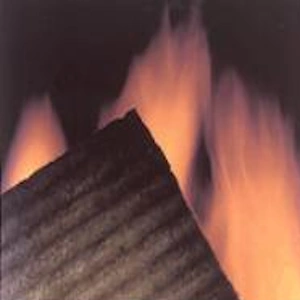
As mentioned earlier, rock wool can withstand temperatures above 1000°C, while the binder in the material begins to break down at temperatures above 250°C. In areas where the temperature exceeds 250°C, the binder evaporates. However, this evaporation does not damage the structure of rock wool, as its fiber structure remains intact, keeping the material rigid and ensuring continued protection against fire.

Since the fibers in thermal insulation materials are highly resistant to temperature fluctuations, rock wool can be used even in very high-temperature conditions. Proper installation is essential to ensure that mechanical pressure does not deform the thermal insulation layer as the binder evaporates.

Due to its superior fire resistance, rock wool belongs to the highest safety class, A1.
Acoustic Properties of Rock Wool: Soundproofing Solutions

Rock wool consists of interwoven diabase rock fibers with air gaps in between. This structure effectively absorbs sound waves, making it highly effective in reducing both airborne noise and impact noise transmitted through walls and ceilings.

  • Airborne Noise Insulation (R’w dB): This rating measures a building’s partition structures’ ability to absorb airborne noise. The higher the rating, the less noise passes through the structure.
  • Impact Noise Insulation (L’n,w dB): This rating measures how well floor structures reduce impact noise, such as footsteps or objects being dropped on the floor. A lower coefficient indicates better impact noise insulation.

Rock wool’s excellent sound absorption properties make it a preferred material for creating quiet and comfortable living and working environments.

Rock Wool Water Resistance and Vapor Permeability: Protection Against Moisture

It is well known that moisture in insulation materials reduces their insulating properties. Rock wool that has been exposed to rain may appear wet, but in reality, only a few millimeters of its surface are affected. Despite its porous structure, impregnated rock wool is a non-absorbent material. If water is forcefully pressed into rock wool, it may absorb some moisture. However, as soon as the pressure stops, the water evaporates, and the material dries out, regaining its original insulation properties.

Most polymer-based insulation materials have a dense internal structure that makes them poor at allowing water vapor to pass through. As a result, walls insulated with such materials have high vapor resistance, and if ventilation is inadequate, moisture can accumulate inside the building. Rock wool, on the other hand, is vapor-permeable (its vapor resistance is similar to that of air). This allows buildings insulated with rock wool to “breathe,” ensuring a healthy indoor climate.
Environmental Sustainability of Rock Wool: A Nature-Friendly Insulation Material

Rock wool is an environmentally friendly choice because it is made from naturally occurring rock. Additionally, insulation is one of the few industrial products that helps save more energy than it consumes during production. Over a 50-year period, a typical insulation product can help save 100 times more primary energy than was used in its manufacturing, transportation, and disposal.

By reducing the need for heating in homes and workplaces, less fossil fuel is burned, leading to lower emissions of harmful pollutants such as CO₂, SO₂, and NOₓ. The energy balance becomes positive just five months after insulation installation. If rock wool is used for heating pipe insulation, the energy investment can pay off in less than 24 hours—the energy savings achieved are more than 10,000 times greater than the energy used for production.

Cladding Sheets and the Right Cover Material

Cladding Sheets and the Right Cover Material – Protection and Durability for All Conditions

Cladding sheets and their application are an essential part of industrial and technical insulation projects, providing both mechanical protection and long-term durability in various environmental conditions. The choice of appropriate cover material determines the efficiency of insulation, protecting it from weather, corrosion, and mechanical damage.

What Are Cover Materials and Why Are They Important?

The usability of industrial insulation for different purposes and conditions depends not only on the insulating properties of the materials but also on the choice of appropriate cover materials. In many industries, such as paper, chemical, food, and energy sectors, equipment is often used in humid and chemically active environments.

Many pipelines, equipment, and tanks are located outdoors, where they are exposed to all environmental impacts. Even indoor environments can experience significant temperature fluctuations, sometimes posing greater challenges than outdoor conditions. All these factors, along with many others, influence the properties and lifespan of insulation.

In addition, the mechanical properties of the insulation cover are often critical, such as resistance to compression, tension, bending, vibration, impacts, and hardness.

Due to these factors, selecting the right cover material is essential.

Metal Sheet – The Most Common Cover Material for Industrial Technical Insulation

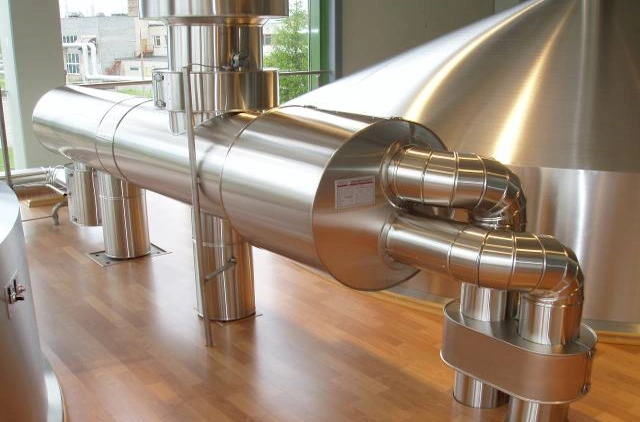
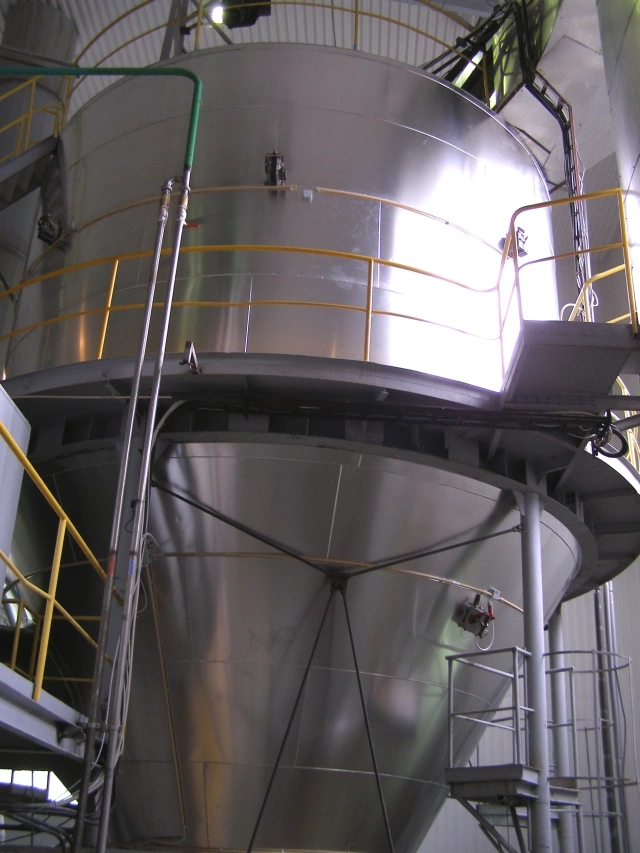
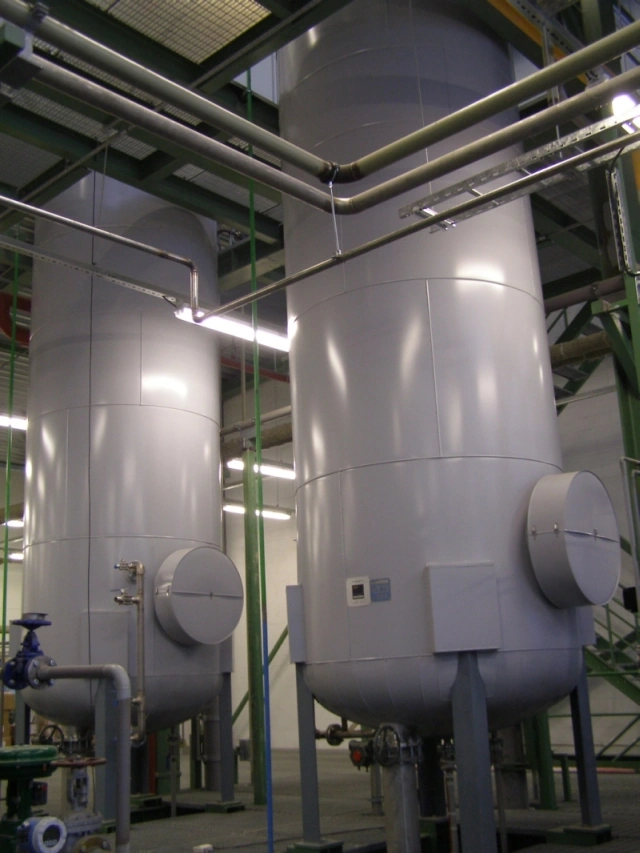
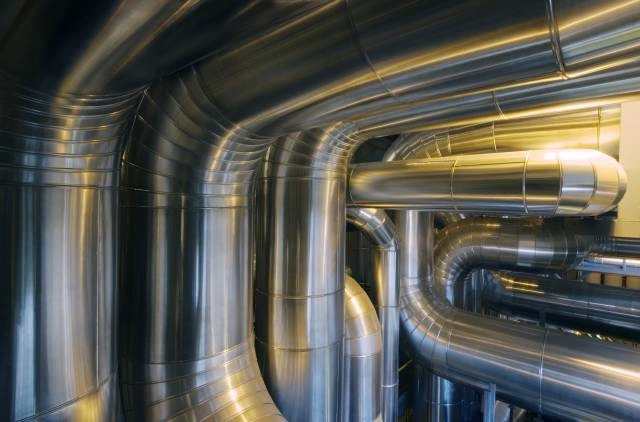
Today, metal sheet is the most commonly used cover material for industrial technical insulation. Smooth sheet metal is generally used for covering pipelines, equipment, and smaller tanks, while profile sheet metal is primarily used on flat surfaces, such as large tanks, boilers, and industrial electrostatic precipitators. Exceptions include the use of fire-resistant fabrics, foils, plastic materials, and others as cover materials.

Cladding Sheets Are Designed To:

  1. Protect insulation from mechanical damage.
  2. Shield insulation from weather-related effects, such as:
    • Corrosion caused by moisture.
    • Brittle degradation of insulation due to UV radiation.
    • Erosion of surface layers caused by airborne particles in windy conditions.
  3. Protect insulation from industrial corrosive environments.
  4. Facilitate easier cleaning of insulation, maintaining high hygiene standards (e.g., in the food industry).
  5. Prevent dust generation from insulation materials.
  6. Enhance the appearance of insulation and integrate it with architectural designs.


Considerations When Choosing Cover Materials

When selecting cover materials, it is crucial to consider their properties and applicability in different environments based on specified conditions. It is also important to remember that the support structures and fastening elements of insulation cover materials play a significant role in the overall integrity of the insulation.

Examples of Key Considerations:

  • Heat bridges, solar radiation, and other heat sources can significantly increase the surface temperature of cladding sheets.
  • In the event of a fire, cladding sheet temperatures can rise drastically. For this reason, the use of aluminum cladding sheets in high fire-risk areas should be avoided.

Main Types of Cladding Sheets and Their Benefits

Depending on the application and purpose, cladding sheets are made from various materials. The most common materials are:

1. Galvanized Steel Sheet (Operating Temperature: 200°C / –60°C)

Galvanized steel sheets are used in situations where surface coatings do not require special demands. With a zinc layer thickness of 275 g/m² or 350 g/m², the material offers high strength, hardness, significant corrosion resistance, and low cost. The melting point of zinc is 420°C. At high temperatures (around 900°C), the zinc layer ignites and burns with a bright flame, releasing toxic zinc oxide, which can cause poisoning if inhaled.

Zinc salts, formed when zinc comes into contact with acids (even weak ones like those in food such as oxalates, rhubarb, apples, etc.), are highly toxic. Therefore, galvanized steel should not be used in the food industry. The lifespan of galvanized steel depends on the wear of the zinc layer, which averages 0.6–1.2 micrometers per year depending on the environment, resulting in a lifespan of 20–40 years. In coastal areas and pools, wear rates increase to 2.1–4.2 micrometers per year.

2. Stainless and Acid-Resistant Steel (Operating Temperature: 800°C / –200°C)

Stainless steel (RST; AISI 304) and acid-resistant steel (HST; AISI 316) cladding materials are used in harsh environments where galvanizing is no longer sufficient for corrosion prevention. Key applications include the chemical, paper, and food industries, as well as environments with heightened hygiene requirements, such as the medical industry.

Stainless steel is a 20th-century invention—a metal alloy consisting of iron as the main element, with chromium and nickel added to prevent corrosion. To qualify as “stainless steel,” the alloy must contain over 12% chromium, which forms a thin protective oxide layer. Higher chromium content improves corrosion resistance, while nickel enhances overall durability, especially in chloride-rich environments.

3. Aluminum Sheet (Operating Temperature: 300°C / –60°C)

Aluminum offers excellent properties such as good corrosion resistance and low density, making it highly useful as a cladding material. Its surface forms a thin, dense oxide layer that protects against further corrosion.

Advantages over galvanized steel:

  • Better resistance to acidic environments.
  • Does not produce sparks under friction or impact.
  • Weighs only a third of galvanized steel.
  • More aesthetically pleasing appearance

Disadvantages:

  • Unsuitable for fire-resistant insulation (melting point: 620°C).
  • Requires more careful handling during manufacturing.
  • Mechanically weaker and more prone to damage than steel.
  • To achieve similar strength, thicker sheets are needed, increasing cost.

4. PVC-Coated Galvanized Steel (Operating Temperature: 100°C / –60°C)

This material features a polyvinyl chloride-based coating, offering excellent workability and high corrosion resistance, even in harsh industrial and coastal conditions. However, it does not withstand UV radiation well.

5. PVDF-Coated Galvanized Steel (Operating Temperature: 110°C / –50°C)

Polyvinylidene fluoride (PVDF) coatings are known for their exceptional color retention, making them ideal for applications where long-lasting color is critical. The downside is their susceptibility to scratches.

6. Painted Galvanized Steel (Operating Temperature: 100°C / –60°C)

Painted steel sheets are made from pre-galvanized and painted steel, suitable for use in indoor environments with low humidity and light environmental impact, such as clean air conditions.

Common paint types include:

  • Polyester: Provides good resistance to weather, corrosion, and abrasion.
  • Pural: A polyurethane-based coating that withstands UV radiation well and remains flexible even at low temperatures, with excellent chemical stability.

Other metals, such as copper, tin, and Aluzinc, are occasionally used as surface coatings for steel sheets.

Looking for Professional Cladding Sheets and Insulation Solutions?

Contact us, and we will create a solution tailored to your needs, ensuring long-term reliability and protection! Contact Us.